The New Technology Frontier: Parts and Service

Let there be no doubt, automotive retail is undergoing rapid and seismic transformation that will permanently change how OEMs, NSCs and dealers retain profits and engage customers. Drawing upon my years of experience in the technology industry, it’s become evident to me that digital transformation is a certainty and will drastically disrupt how automotive retail businesses are run.

The parts and service segments of dealerships will be among the most profoundly impacted by new technologies and industry trends.

It’s up to OEMs and dealerships on whether they want to surf the technological wave, keep ahead of it or get left behind. Savvy dealerships see opportunity in change and will choose to invest in technology as a pathway to ensure successful aftersales operations into the future.

With the parts and service business supplying over 50% of a dealership’s profit, it’s a no-brainer that investment in technology is where OEMs, NSCs and Dealerships should be spending their time and money to retain their earnings.

Over the past few months, I’ve spent time speaking to some of our valuable OEM partners and Dealerships to discuss both the challenges and benefits of disruption, and how new technology is impacting the way they run their businesses and serve their customers.

What became apparent is that a number of technological trends have emerged. Here’s my take on the five areas that we anticipate will have the most significant impact:

  • Evolution of the dealership
  • Digitisation of the customer journey
  • Connected and more complex cars
  • Vehicle ownership structures
  • Electric vehicles and autonomous driving

Evolution of the Dealership

Thriving dealerships succeed for a reason – they’re responding to change and evolving. The dealership model is expanding and developing into larger, multi-brand dealerships that exploit the advantages of larger volume, economies of scale and greater processes and system efficiency.

These larger, more successful dealerships around the world are discovering more efficient and integrated software products that are specific to the automotive industry. Technology developers and software providers have realised this and are gathering data from OEMs, dealerships and customer sources to improve demand forecasting, boost productivity, drive better sales processes and create a more personalised customer experience, right across parts and service.

However, there are new challenges on the horizon. With cars becoming more sophisticated and customers seeking new technology, vehicles and components are becoming more complex. The need for more high-tech workshops and skilled technicians is at an all time high. Complicating this further is a skills shortage, with too few new technicians entering the industry – especially in the USA.
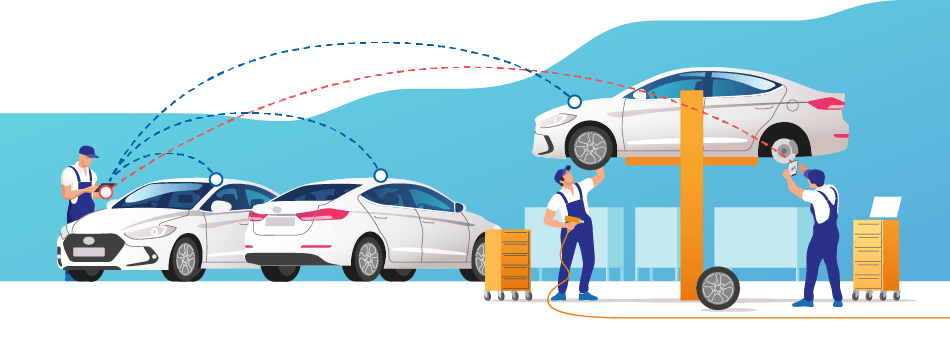
As I travel, I see that larger dealerships are placing a greater focus on keeping talent, with faster career pathways and more training. As vehicle technology continues to explode, customers will place greater value in ‘genuine servicing’, making great technicians even more vital. The little local garage around the corner might be in trouble.

Inside larger dealerships (and hopefully yours too), Parts and Service departments work hand-in-hand to boost workplace efficiency and create a good experience for customers. Having both Parts and Service departments accessing the same genuine data from a single source streamlines workflow and removes expenses, such as storing parts and the cost of financing. Shared technology also reduces cycle times for trade customers and gives a more consistent customer experience for retail customers.

Digitisation of the Customer Journey

In today’s fast paced and digital world, modern consumers expect new technology, both in their cars and in the parts and service sales process. In this new world, the flexibility of online engagement and self-service are expected by your customers, who enjoy it in all areas of their life.

According to Forbes, by 2025, roughly 75% of the global workforce will be Millennials. They’ve been brought up on a diet of Instagram and Snapchat, so an environment that doesn’t have modern tools, technology and resources is “unimaginable”. Automation, transparency and trust are crucial to retaining Millennial customers for future service and repairs. They want a personalised, digital process and they want to buy on their own terms.

Connected vehicles provide exciting potential to redefine the customer aftersales experience and drive better sales and retention strategies. OEMs and dealerships will have access to more customer and vehicle data than ever before. However, leveraging this data into information that is easily understood and actionable will be challenging.

For example, during a vehicle service, these customers want to feel like a priority at every step of the process – including before, during and after the dealership visit. We are gradually seeing a trend of more targeted individual service and engagement with customers.

Solutions such as online service bookings, self-serve quoting and electronic vehicle health check systems are playing a key role to improve the customer experience, but there is much more to do.

So, what’s next? How do today’s OEMs and their franchised dealerships continue to grab the attention of customers, improve communications and develop brand loyal vehicle owners?

We are seeing OEMs investing more in data analytics and insights to gather accurate customer information from multiple channels. Detailed and timely evidence that can reveal anything from lapsed service customers to the success of wholesale parts campaigns, as well as valuable insight to determine customer behaviour and buying patterns. Information that is rich in detail and allows for more targeted offers across multiple digital channels.

The transformative impact of technology adoption and changing customer expectations now means all departments seamlessly serve the customer. Everyone at the dealership who has contact with a customer is now a salesperson.

Connected and More Complex Cars

Why the challenge? Well, we see dealerships struggle to fully leverage the data they already have in their back-end systems and the availability of more data will only compound this issue.

Data silos between departments and aftersales software that don’t work seamlessly together are two areas that present an opportunity for improvement. Capturing and converting the connected data into actionable insights will require better cooperation inside the dealership. New technologies will also be needed to normalise disparate data in real-time to empower a timelier, more efficient and customer friendly process.

The benefits of customer friendly processes are evident. When you engage and involve a customer in the service process, they’re more like to have a positive experience and you’re more likely to retain them as a customer. Better alignment and shared open data integration processes between OEMs, dealerships and technology providers are critical to fully capture the value of connected data, and create positive customer experiences.

Here at Infomedia, we are excited about the opportunities that lie ahead. Our products are integrating with new vehicle technology that communicates with the workshop and customers – even before customers arrive for their service appointment! Soon, onboard vehicle technologies will help customers plan their service visits using their smartphones and devices. Before customers arrive, they will know exactly what parts are required and when their cars are available to enter and leave the workshop.

Not only that, dealership staff will be able to do more pre-planning, as the detailed information that they receive tells them the faults the vehicle has before it even arrives. Parts departments will be able to use just-in-time (JIT) parts ordering with better inventory control – saving valuable time and money!

Changing Vehicle Ownership Structures

But this is just the beginning. Technology will fundamentally change the way people get from one place to another. Cars-as-a-service (CaaS), ridesharing and car subscriptions are gathering momentum.The basic concept of mass vehicle ownership will no longer be the norm.

Technology changes, along with social and environmental pressures, will also impact the way people drive and what they choose to drive. For example, while travelling in Europe, I noticed the popularity of smaller and smarter vehicles, and that larger vehicles weren’t as common.

Naturally, smaller vehicles are less profitable than larger vehicles. However, consumer electronics – particularly smartphones – have changed consumers’ perceptions. Size doesn’t matter. Consumers no longer believe that smaller is cheaper or less valuable. In fact, they expect smaller cars to be just as smart and technologically advanced as larger cars.  Automakers will face a challenge in meeting this shift in perception.

A recent report by McKinsey said: “The automobile, mechanical to its soul, will need to compete in a digital world, and that will demand new expertise and attract new competitors from outside the industry. As value chains shift and data eclipses horsepower, the industry’s basic business model could be transformed. Indeed, the very concept of cars as autonomous freedom machines may shift markedly over the next 50 years.

Based on our customers’ feedback and our own research, new technology will impact a consumer’s relationship with their vehicle. It’ll change how vehicles are sold, owned, serviced and repaired. IOT (Internet of Things) technology will give real-time data, throughout the value chain, empowering OEMs and dealerships with a better understanding of customer behaviour and preferences.

There’s another benefit of this brave new world of data-driven and connected cars. You’ll be happy to know it will lead to more demand for genuine OEM parts. With integrated systems, specialised labour forces and complex safety software, it will be difficult for aftermarket suppliers to replicate proprietary technology used in connected vehicles.

Electric Vehicles and Autonomous Driving

With more electric and autonomous vehicles on the road, dealerships are bracing for impact. But don’t panic, adoption will take time. McKinsey also predicts that by 2030, fully electric and autonomous vehicles will comprise up to 15% of new car sales and 10% penetration in the car parc.

The shift to electric vehicles brings with it a few small problems. Electric vehicles have more electronic components, requiring more specialised servicing than traditional internal combustion engines. Dealerships will need to invest in additional equipment and training. In addition, the cost of maintenance over the first five years of ownership for electric vehicles will be significantly lower than pure combustion engine vehicles leading to a reduction in parts and service revenues. Also, advancements in vehicle manufacturing quality and techniques will result in less frequent service schedules and longer replacement times for parts.

If you’re seeing your customers less often, you better make it count. Customer retention will be even more important. Dealerships will still be “brand experience creators” as customers see more value in taking their new shiny connected vehicle to a dealership for genuine servicing.

Embrace Change: The Key to Evolving & Driving Profitability

If there is one take away as we approach the new frontier in parts and service, it’s that the key to growing the aftersales bottom line is to use new technology that centers around improving the customer experience, both inside and outside of the dealership.

To do this, OEMs and dealerships will need to harness and implement means to capture vehicle and customer insights. They need to adopt new products that draw upon those insights, as a critical path in raising dealership efficiency and improving customer service.

I hope this article shows you that the future is full of opportunities. While there will be inevitable challenges, the benefits are genuinely powerful. I’ll continue to explore each trend in future articles, providing further insights into how OEMs, NSCs and Dealerships can embrace new technologies to drive parts and service profits and build brand loyalty with delighted customers.

 

Innovation – Is it Just a Cliché?

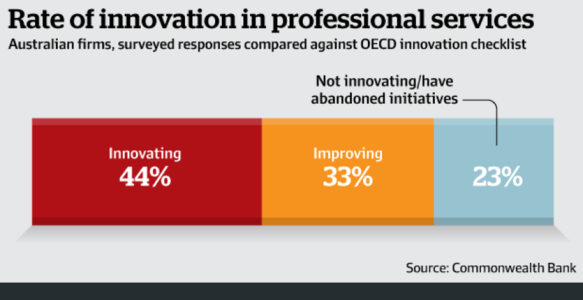
In a recent article by the Australian Financial Review, it states that half of Australian firms believe that innovation is merely a buzzword. The survey results also show that 23% of companies aren’t innovating at all.

Innovation

Innovation – What Does it Mean to Us?

It’s no secret that the term “innovation” has been overused, especially in the technology sector. Sadly, this has led many industry players to lose sight of the meaning and importance of the concept. It’s very easy to write-off innovation as just another cliché or buzzword – but the real challenge comes from making it tangible and infusing it in everything an organisation does.

Here at Infomedia, we choose to invest in innovation and make it a core part of our values. We’re always striving to be a unique kind of company, with a different view of the world. We use an innovation mindset to help guide our attitudes toward product development, customer relationships and performance expectations of our global teams.

While our vision is to solve big problems, our approach facilitates progression, not perfection. I’m a firm believer that improvement and growth comes from change, and having an innovation culture is mission critical for success.

Building an Innovation Mindset

To make innovation a part of our DNA, we’ve built a framework that challenges the way we view ourselves, our capabilities and our goals. This framework ensures our innovation priorities are focused and aligned with our business strategy. It enables us to harness not only our internal ideas but those of our global customer base – with a defined pathway for investment and action on worthy ideas.

The importance of this mindset also applies to external factors; the way we communicate and the type of discussions we have with our customers is equally important to foster innovation. This ensures our customers get involved in the innovation process early and get to shape the ultimate outcome.

Our Customers are at the Heart of our Innovations

One of our favourite ways to innovate is to collaborate with our customers. We put our customers at the centre of everything we do and they’re at the heart of our innovation process. With customers in 186 countries, we are presented with many innovation opportunities.

Some of our best product innovations have come from asking our customers: “What are your challenges?”

We encourage an open exchange of ideas and have multiple pathways for collaboration. Our team have a deep level of understanding of our customers’ challenges, and are well positioned to ask the right questions and innovate quickly.

What About the Breakthrough Innovations?

The best breakthrough innovations usually have a disruptive business model. This is sometimes a barrier to success if the current market participants are not ready for it – no matter how good the product innovation is.

In the retail automotive space, dealerships are under pressure to provide the complete ownership experience to vehicle owners, while lowering their operating cost at the same time. When I visit dealerships, I don’t hear them calling for ‘breakthrough’ innovations. They want the simplicity of cloud solutions, with smart interoperability to improve sales processes and customer satisfaction.

When we scope ideas and challenges, our goal is never about ‘disruptive innovation’, it’s about solving problems. We don’t want to build software solutions that disrupts a dealership’s process or workflow – we want to improve it.

Innovating with Purpose

We have a long history of innovation at Infomedia, and the key considerations when we introduce new technology to our global customers are always relevance and purpose.

One of Infomedia’s earliest innovations is the Microcat Electronic Parts Catalogue (EPC). In today’s retail automotive landscape, some might see EPCs as a mature product. Dealerships and Parts Departments use it to look up and order the right parts – nothing more, nothing less.

However, we look beyond what an EPC is designed to do, and think about how to evolve its value to meet ongoing business challenges. Reinventing its purpose allowed our innovation team to explore new and creative ways to leverage technologies. For example, we discovered mobility as an unexploited innovation opportunity for EPCs.

After months of hard work, I’m very excited to announce our latest innovation: Microcat Messenger. It’s a mobile messaging app that integrates seamlessly with Microcat Live EPC. It empowers a dealership’s Parts Department to chat with their trade customers about their parts queries, look up parts information and place orders – all in one convenient location!

Microcat Messenger provides a new way for a Parts Department to interact and engage with trade customers during the buying process. It caters to the next generation of shoppers who use technology, social media and digital platforms to research, interact and shop.

The addition of Microcat Messenger turns Microcat Live from an EPC to a powerful parts selling tool. Dealerships can now turn their Parts Department into an online retail store or e-commerce platform – now that’s innovation!

Innovating and Winning – Not Just a Cliché!

In short, I believe that innovation is imperative for the ongoing success for any company. To us, innovation isn’t simply about adapting and staying relevant. It serves as a good reminder for us to push ourselves to grow, improve and do things better. An innovation mindset challenges us to think outside the box and create cutting-edge solutions that meet the needs of our customers.

So is innovation just a cliché? No, I think it’s best practice. The companies that innovate will win, but they’ll only win if they focus on their customers!

Our Values, Our DNA

Here at Infomedia, we’ve recently refreshed our company core values. The reset in values comes at a time when our company is transforming from being a publishing company to a truly global SaaS business. Our core values have been synchronised to align with the type of performance culture we want to create, and they are a part of our DNA to support growth.

Below are Infomedia’s new values:

  • Accelerating Performance
  • Driving Innovation & Service
  • Navigating Global, Steering Local
  • Having Fun in the Fast Lane

Some might discount corporate values as fluffy sentiments, used to build the perfect, glossy, corporate brand. However, our corporate values are not just meaningless words written on our website, they embody our desire to drive business performance, staff satisfaction and grow shareholder value.

We believe that having values is essential and an integral part of our organisation. Why?

It strengthens corporate identity
The technology industry is often disruptive and chaotic. In a world where things are constantly changing and evolving, full of noises and uncertainty, our core values will always guide our decisions, actions and growth aspirations.

Values shape our identity, act as a unique differentiator that sets us apart from our competitors, and guide how we interact with those around us. Our values will be used to impart the ethos of our company to our Automaker and Dealership partners; informing them about who we are, what the company stands for, and what they can expect from us; our DNA!

values-image

When an organisation is rapidly growing and expanding, it can be easy to lose sight of their unique identity. Core values can be used to ensure that there is no brand dilution. Being a global company with multiple offices around the world, it’s essential for us to have consistent core values, to help unite us all and remind us about the standards that we hold – irrespective of geographic location or language.

This drive for consistency in brand and values also aligns with our Automaker partners who are actively pursuing the ‘One World’ ethos for their brands.

It inspires us to be better
Having corporate values is just as important as setting corporate goals. It aligns and moulds the overall behaviour of how our staff think, behave and work. If your staff don’t know what the company goals are, how do they achieve them? Similarly, if they don’t know what the company values are, how will they behave and conduct themselves?

Core values can be a great source of motivation in the office. When we truly believe in something, we spark the interest of those around us, and inspire everyone to work together to achieve shared goals.

driving-innovationFor example, one of our core values is ‘Driving innovation & service’. This empowers and inspires everyone in the Infomedia team to push their creativity limits. We encourage staff to be open-minded and to think differently, and they are constantly striving to build cutting-edge software that empowers our customers.
It shapes the organisational culture and environment
Values are the heart of our culture at Infomedia; it has a strong influence on our culture, sets the tone of the office environment and influences the work that we produce. Here at Infomedia, we have designed our offices and working space to reflect and foster our values.

fast-laneOne of our core values is ‘Having fun in the fast lane’. Our new Sydney office has a fun and vibrant campus type environment that welcomes and inspires people. By providing an open and conducive work environment, we are happier, we produce better work, and we flourish as both professionals and individuals.


How we expand the Infomedia family
Our care values guide our decisions on recruiting new hires, developing our people, recognising and rewarding success.

We select candidates who are not just skillful and talented, but the best suited for the organisation’s corporate culture. When hiring new staff, we look at candidates who are aligned with our company values. You can always train skills, but it may be challenging to work with someone who doesn’t share the same values.

It strengthens the organisation
Having a set of shared values, beliefs and mindset helps to grow and create a strong organisation. Collaboration and team work builds a strong organisation, and having shared values empowers individuals and teams to innovate in the way they collaborate.As a business, we can only succeed when everyone is on board and aligned in our thinking – that is what gives us the edge and makes us stronger, at all levels of the organisation.

We have found that values can be very powerful and have a huge, positive impact on our organisation as a whole. We embed and embody our core values globally, and they are part of our growth DNA. Infomedia wouldn’t be what it is today, without it.

It is Better to do it The Hard Way

tufekciIn an echo of Malcolm Gladwell’s 2010 “the revolution will not be tweeted”, techno-sociologist Zeynep Tufekci unveiled at TEDGlobal 2014 in Rio de Janeiro last week her thesis that when it comes to using social media to affect lasting change, achievements are not proportional to the energy they inspire. This is a lesson entrepreneurs ignore at their peril.

Zeynep Tufekci is an assistant professor at the University of North Carolina and opened Session 2 at this year’s TED Global in Brazil. Session 2 set out to explore the dichotomy between the opportunities that technology offers us, such as affecting social change; and its dangers, such as how it compromises our privacy.

While many pointed to the Arab Spring as proof that Gladwell was wrong, Tufekci brought a different lens of reality to the belief that social media can topple governments. Just because it is “easier to mobilise does not mean it is easier to get outcomes,” she said. To illustrate her point, while alluding to the Arab Spring and set against the backdrop of the withering efforts in Hong Kong today, Tufekci pointed to the Occupy Movement which she said has not delivered on any of its promises despite its worldwide appeal.

This isn’t to say that these viral movements are not valid. The lesson of the Arab Spring uprisings during 2011 was that while the censored media was impotent amid government atrocities, Social Media was able to blow the lid on it. While “editors sat in their newsrooms and waited for the government to tell them what to do,” activists in Iran, Egypt and Libya were able to use Social Media to collect images of police brutality and violence and get them out to the world’s media via Facebook and Instagram with the use of just a mobile phone. Organisers could mobilise many thousands of demonstrators at just the click of a Tweet-button. The role of modern technology in these historic phenomena should not be under-estimated, but as the rapid dispersion of crowds in Hong Kong this week proves, “all these good intentions and bravery and sacrifice by themselves are not going to be enough” says Tufekci.

By way of contrast, she looked back at the Civil Rights movement of the 1950s and 1960s in the US. Following the arrest of Rosa Parks in Alabama in 1955, supporters mimeographed 52,000 leaflets and distributed them by hand – an effort unfathomable today given our powerful social media technologies, let alone the far more prolific printing technologies available to everyone. While a gargantuan effort, the key lesson Tufekci highlighted was that the activists met face-to-face and bonded. “They created the kind of organization that could think together, create consensus, innovate, keep going together through differences.”

And here is the punchline: “Are we overlooking some of the benefits of doing things the hard way?” she asks.

What does this mean for entrepreneurs and startups looking to quickly create growth to attract investors. Tufekci’s lesson is beautiful in its simplicity: “todays movements feel like startups that get very big quickly”.

Essentially the ability to create the appearance of scale at great speed using powerful communication techniques can be deceptive. Unless startups are able to create sustainability beneath that, they have essentially taken the easy road to what looks and feels like success but ultimately is not enduring and can quickly dwindle. The ‘hard yakka’ of Rosa Parks’ supporters bonded them tightly in an endeavour to which they became deeply dedicated.

The experience of Groupon perhaps exemplifies Tufekci’s message. In 2011 the darling of the group-buying revolution declined a USD$6 Billion acquisition offer from Google before its IPO debut at USD$20. Today, its share price is just USD $6 and its market capitalisation is USD$2 billion less than the Google offer its now much-maligned CEO Andrew Mason snubbed. Most commentators agree Groupon’s mistake was to focus on rapid new customer acquisition rather than sustainable customer retention. In building a lasting business – just as with affecting permanent social change – it is important to take the long view. The apparent might of social media to collect a huge audience can be a dangerous mirage. As Tufecki warns: “the way technology empowers social movements can paradoxically weaken them.”

TED: Davos for Optimists

Hello, my name is Jonathan Rubinsztein and I am a TEDdict. A TEDaholic. A TED junkie. But I suspect I will never be cured, and don’t want to be.

TEDLike any dependence, I crave the high I receive from TED conferences. As I sit on the plane to Rio for my 6th conference in as many years, I mind drifts back to my first. Unlike many addictions, the high I receive from each hit is as good as that first one.  Also, unlike most dependencies, the elation I derive from the profound insight, inspiration and – most importantly – ideas is worth every penny I spend… I have no regrets.

For those who have never been to a TED conference, I hope to share with you some of the experience. Most of you would be familiar with the TED videos on you Tube – there have been more than a billion views – and almost everyone who has must have been touched in some meaningful way by a TED idea. For me, for instance, this video by simon simek profoundly changed the way I view my own business. And yes, that is an important point. I am a managing director of a multi-million dollar IT consultancy employing hundreds of people across Asia and I have no problem prioritising 5 days in Brazil for this conference. The value I can contribute back to my business as a result will be immeasurable in terms of return on investment.

Imagine a fully packed schedule from early in the morning to late at night with 22 minute presentations crammed into the every space of the day. Music, performance, conversation, food and incredible conversations that constantly pushing and stretching the status quo and challenging your world view. The presenters and audience are both as fascinating as each other and you’re immersed in this pool of amazing, talented, interesting, people having dinner, lunch and breakfast with you; interacting, discussing the previous presentation or insane event. After five days of such creative binging I usually come back exhausted and yet exhilarated; with enough intellectual and emotional fuel to last me  months. It takes even longer to fully digest or integrate the insights and ideas

Why not just watch it on You Tube? Because the real benefit of the experience is as much about the audience as the speakers. While the calibre of speakers  extends to such luminaries as as Bill Clinton, Jane Goodall, Malcolm Gladwell,Al Gore, Gordon Brown, Richard Dawkins, Bill Gates, Bono, Mike Rowe, Google founders Larry Page and Sergey Brin, and many Nobel Prize winners – they also make up the audience!. It is the discussions after the presentations that are as valuable as the presentations themselves. To only watch the presentations on You Tube is as deficient as watching a concert on mute. For instance, one of my more lasting memories is a thoroughly scintillating business discussion with Jeff Bezos in LA that helped to revolutionise my business. I cannot think of another event that could afford me that kind of access to brilliance.

I have often heard TED described as Davos for optimists, and although the tagline is “ideas worth spreading” this is often much more than ideas and it really is about the people who are changing the world for the better. Throughout the coming week I will try to download some of that experience here. I hope you can join me and maybe even become fellow addicts yourselves!

We need a better climate for entrepreneurs in Australia

Last week I had an article published in the Rust Report about Australia’s attitude to innovation, risk and entrepreneurism:

Rust Report: Why are we taxing risk instead of rewarding it?

investorI urged the Federal Government to relax some of the tax rules around share options to encourage more investment and risk. The argument for this has been made most strongly by Business Spectator journalist Paul Wallbank in this article earlier this year: “Is Australia Open for Start-up Business“. I spoke to Paul on Twitter about the topic and he referenced a blog post he had also written about investment capital investment, entitled “Counting the Cost of Investors.” In it he wrote: “For founders, the tricky balance in raising enough money to achieve their objectives while not giving away a controlling interest.

He makes an excellent point about another general malaise in Australian Innovation – short-termism among the investment community. I agree with Future Fund Chairman David Gonski who told an Australian Securities and Investment Commission dinner last year that “Sadly, in Australia, we live in a world of Short Termism”. This is where we also differ from the far preferable climate in The Bay Area and Silicon Valley where companies are able to take a much longer view around building their product, proposition and customer base before being required to return gains. They also have far greater controls over their destiny – it is my undertanding that investors there prefer to advise more than control.

We need to give our entrepreneurs more room to move for them to succeed and without that room it is far harder to achieve what is already a difficult challenge.

As a post-script, this is an interesting article by Marc Andreessen about how the investment culture of Silicon Valley versus elsewhere in the US: Beware Non-Silicon Valley Investors.